My Paradise


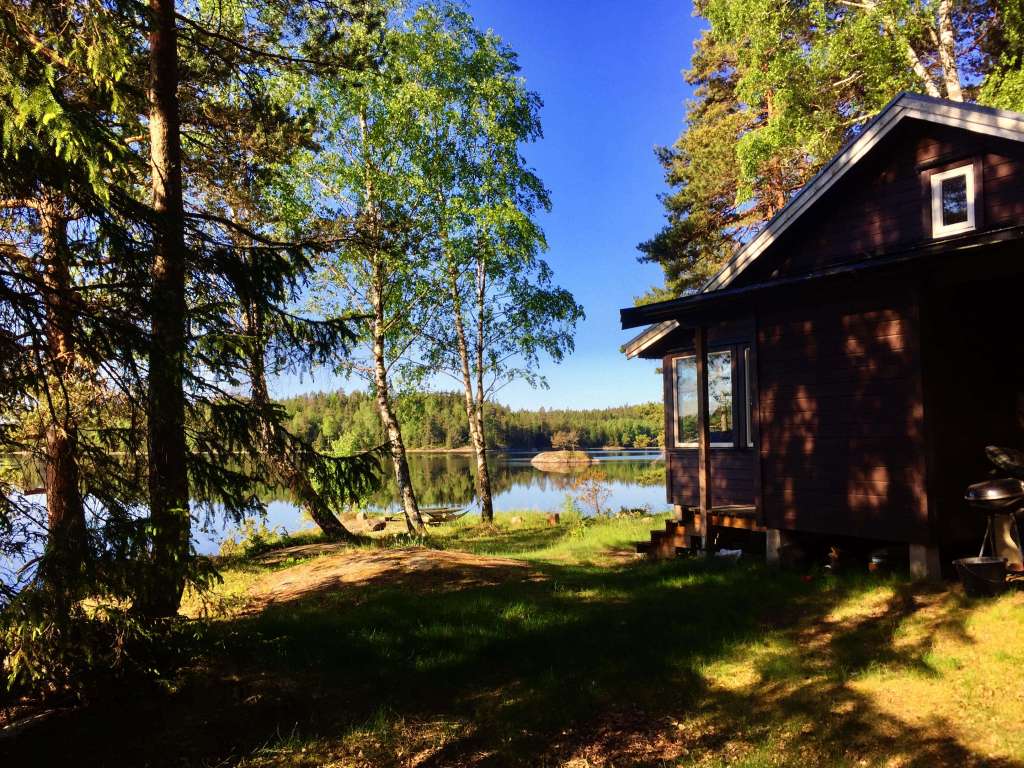
Here is my paradise on earth, where I seek shelter from daily stress. My cabin. Nothing compares to that. Few people around. Calm. Lots of nature. Many things to do, if I want, or just relax. Or throw stones at Sweden, if I’m angry. The Swedish border is about ten meters from the island where my cabin is located, in the southeast corner of Norway.

My father grew up on this island. The family of eight moved here in 1944, in World War II. Our country was occupied by Nazi Germany and many starved, especially in the cities. But on the farm, which also lies on this island, my grandparents were able to grow their own food and care for their six children.

The cabin has a dark and mysterious past

From my father, who was only ten years old at the end of the war in 1945, I have heard that my grandfather sometimes asked him to check if there was anyone in this cabin. Sometimes there were two civil clothed men there. Possibly the border police, he thought. There were many refugees and people from the resistance forces who crossed the border back in those days, and my father remembered that he placed a secret package on a small islet nearby. However, my grandfather never talked about this. Not to him or anyone else.


Today, the situation is more peaceful, thank God. The noise comes usually from my hammer and saw. I have built a few buildings, as you can see in the picture above. To the left; a shed where I store my tools, it has slate on the roof. In the middle; a small Viking shower with a garden water jug. (There`s no water pipes and electricity, except a solar panel.) The shower is ornated with dragon heads, just like the sauna on the right. The sauna, warmed by a fireplace, is built next to a mountain and has a roof of peat and walls of clay and stone.

Lake Kornsjø is perfect to paddle canoe. Narrow channels, small inlets. A lot of wildlife to explore. Beaver, fish, birds, moose, fox, wolf and many other animals. Fresh air to breathe, clean water with no garbage of plastic. Even the Germans are back during the summer season, now as friendly tourists. And who knows, perhaps some of them are kinfolks of the soldiers who were here. I don’t know. They`re welcome here anyway.
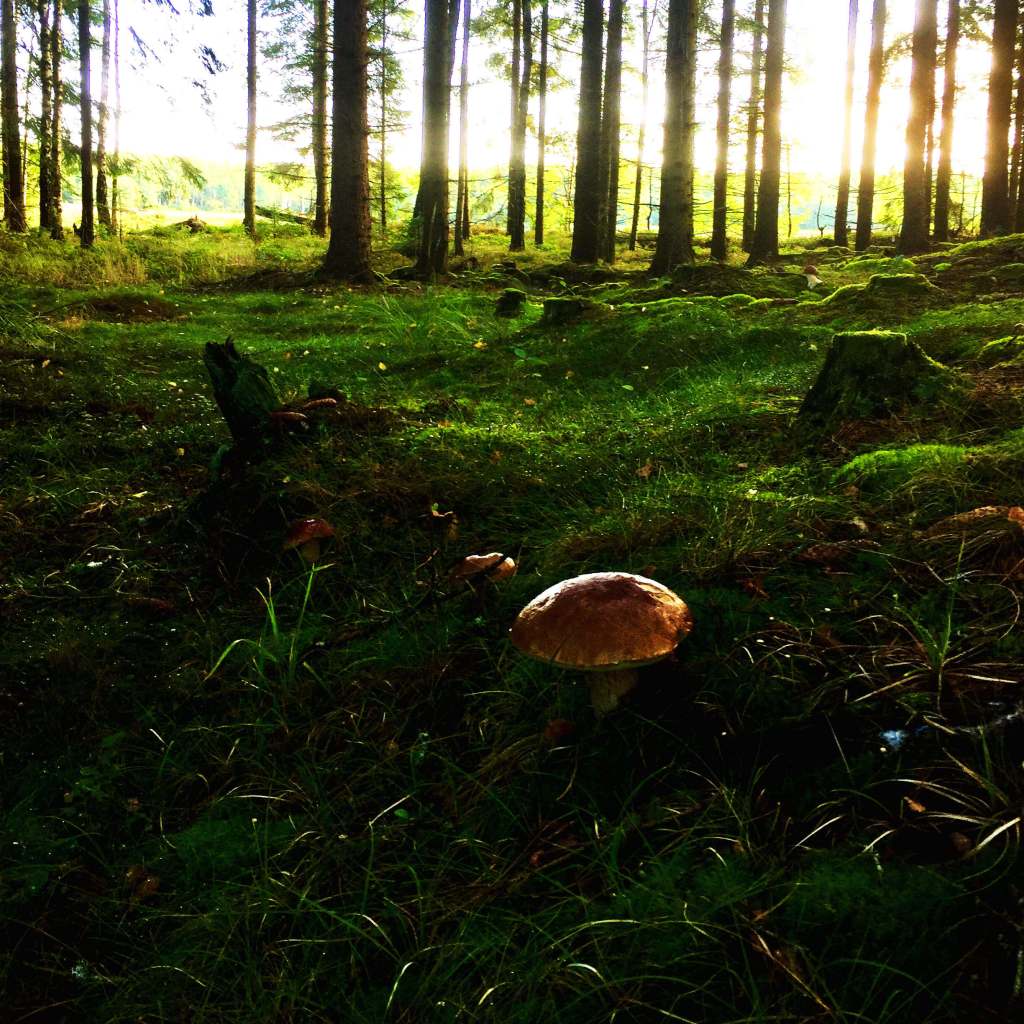
In the late summer and autumn, there`s a lot of mushrooms in the woods. Boletus and chanterelles are galore. But I only use my cabin from April to November, and in the meanwhile, when it is dark and cold, I sit home and write as hard as I can. That’s my most productive period, while I dream myself away into a world of fiction and good memories from my summer paradise. 
Pilgrimage to Trondheim

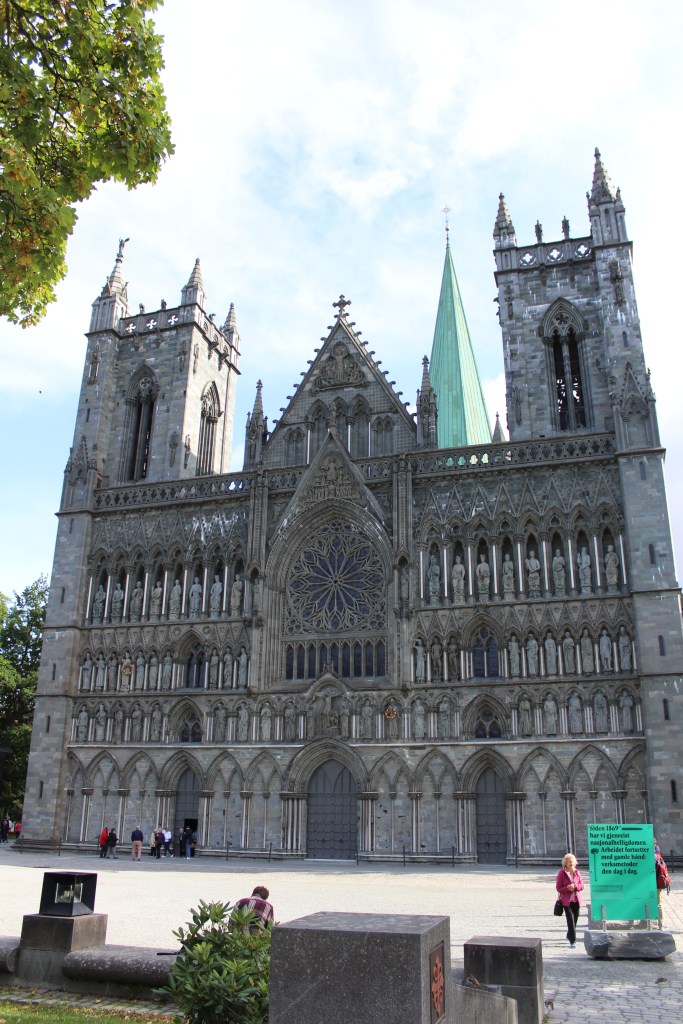
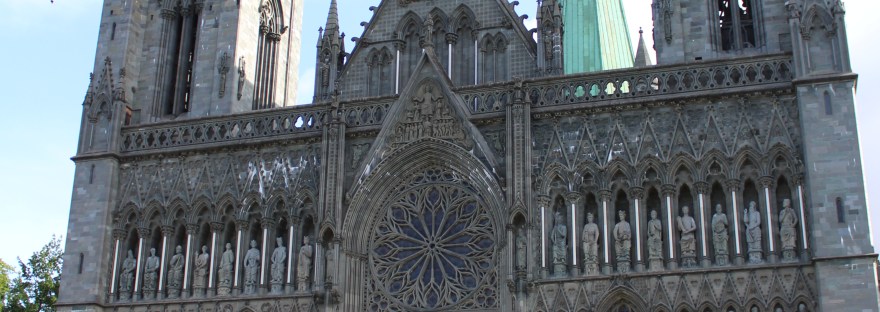
Nidaros Cathedral

In the fall of 2019, my son and I travelled on a «pilgrimage» to Trondheim — it was not really a pilgrimage, because we did not walk on foot. We travelled by train. But we stayed at the hotel Nidaros Pilegrimsgård, just off the park of Nidaros Cathedral, down by the banks of Nidelven. A hotel that is highly recommended. Beautiful and quiet location.

The main goal of the trip was to experience Trondheim. So, we walked a lot in the centre and along the Nidelven river and saw most of the attractions. Nidaros Cathedral, Archbishop’s Palace, Kristiansten Fortress and much more. Not least, we had a look at the excavation of Elgeseter Monastery, which I was really looking forward to.

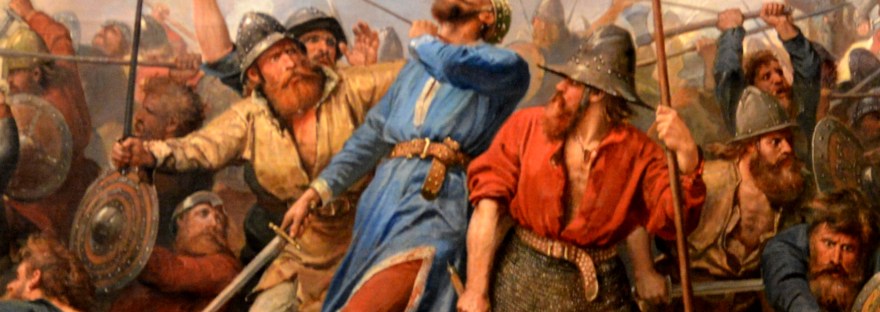
In the ruins of the monastery church at Elgeseter Monastery, archaeologists are searching for the tomb of the legendary Harald Hardrada — the Norwegian Viking king who died at the Battle of Stamford Bridge in 1066 A.D. His death is also linked to the end of the Viking Age. But at the time of writing, the king is still playing hide and seek with the archaeologists.

It will be exciting to see if they find him eventually. His remains can provide important information beyond what the historical sources tell and give us a better picture of who he was. At least he lived a dramatic and adventurous life.

As a writer, I am happy to live in Norway. Something exciting is continuously emerging from the earth, historical discoveries that inspire me to write.
Trondheim is well worth a visit.

The monastery church at Elgeseter Monastery
Nidelven river
Nidaros Cathedral, details from the exterior

The latest news about the newfound Viking ship in Norway

“We are likely to find remains of wood, animals and objects. Maybe bone remnants after the burial (s),» says project manager Christian Løchsen Rødsrud.
Source: UIO, museum of Cultural History

It became a world sensation when archaeologists discovered a new Viking ship on the farm Gjellestad near Halden in Østfold County in Norway last year. Prior to Gjellestad, no buried Viking ship had been discovered in Norway for over 100 years. On Monday, August 26, the shovel is put into the ground to document the condition of the ship.

The ground penetrating radar image of the ship

“Some have dug a drainage ditch to the ship earlier. We reopen that ditch but extend it toward the midship to assess conservation conditions. The ground penetrating radar measurements show a deviation from the west and into the midship, which we interpret as the result of a grave plunder. That’s why we also put a shaft in there, to find out more about this looting. At the robbery of Oseberg, a few years after the ship landed on the ground, the robbers again left shovels and other equipment that allowed the looting to be timed. We hope to find that too,” says archaeologist at the Cultural History Museum, Christian Løchsen Rødsrud., Who is the project manager for the ship’s excavations.

To the right, gold items that have previously been found near the grave mound.

The archaeologist is optimistic about what they will find.
“We hope to find wood from the boat that we can date, and that is likely. There may also be other organic things that can be dated. We definitely find boat nails. And because we dig quite close to the midship, where it may have been a burial chamber, it is quite likely that we will find something from the rituals that have taken place on board the ship. Typical objects from the three best preserved ship tombs we know of in the past are animal remains, and metal and wood objects.”
The measurements show that the ship is about 20 meters long, and thus about the same size as the Viking ships on display at the Viking Ship House at Bygdøy in Oslo. But Rødsrud emphasizes that this is not a new Oseberg discovery.
“Probably it is more decomposed than that, and if we find wood residue, it is probably more similar to the Tuneskipet than Oseberg. But it all depends on conservation conditions,” he says.
A major difference from the Oseberg tomb where the entire ship is preserved is that this tomb no longer has any protective pile over it. The soil over the Gjellestad ship, on the other hand, has been ploughed by the farmers at Jellestad for many, many years. This means that much of the ship’s rallies have probably disappeared, and that the ship is very damaged at the top. Rødsrud is nevertheless positive.
“The signals from the geodata are clear, and although parts of the ship are likely to be severely degraded, the lowest parts of the ship may be better preserved. Especially about a meter below the ground surface, the keel of the ship seems to emerge clearly. The signals show a tight boat shape, which means we don’t think it has completely collapsed. The deeper down the keel we get, the better the preservation conditions,” Rødsrud believes.

A presumed grave with a possible connection to the battle of Stamford Bridge has been discovered in Norway

During an excavation of Elgseter monastery church — which ruins now lays beneath the surface in Trondheim — the archaeologist has found a stone wall next to the altar. This could be the grave chamber of an important person, such as king Harald Hardrada, who has been buried in this church. Hardrada was killed when he lost the battle of Stanford Bridge, and the invasion stopped. Modern historians often connect his death in 1066 A.D. to the end of the Viking age (793-1066).
The excavation will continue throughout September 2019.

To the left is the corner of the presumed grave chamber, and to the right is the corner of the altar

The Vikings used cannabis

This was the breaking news of the summer of 2019. The evidence was dug out of a bog near the Viking settlement in Newfoundland. Still, nobody can tell for sure if the Vikings smoked pot during their stay in North America. But the famous Oseberg ship might give us a hint.

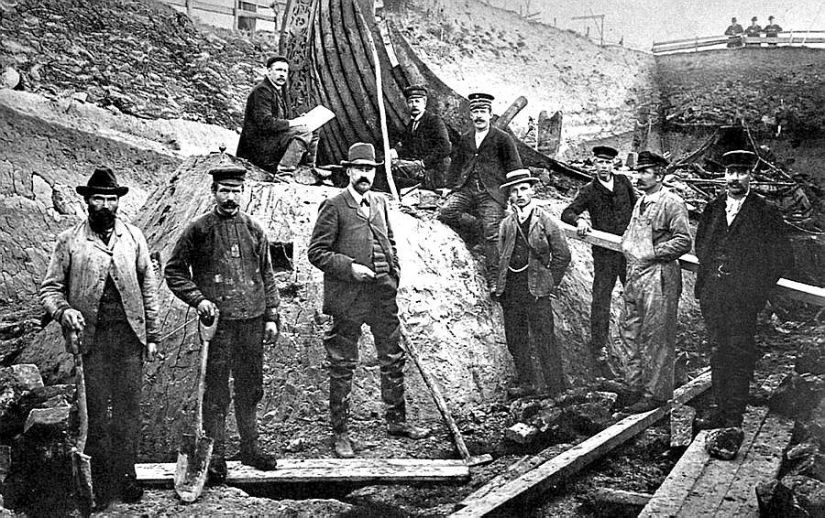
The excavation team at Oseberg 1904

The Oseberg ship is the best-preserved Viking ship in the world, and a kind of Norway’s grave of Tut, with many burial gifts that can tell us a lot about the Vikings. Preserved by the clay in the grave mound, the archaeologist found buckets with apples where the red colour was still intact. It was even blueberry, garden cress and uncooked bread among the food for the two women who were buried in the ship, on their final journey to the afterlife.

It is uncertain who these two women were, but their skeletons reveal that the oldest one struggled with cancer. She was around 80 years old when she died, and she was buried with cannabis seeds in her pocket. In an interview with the Norwegian TV channel, NRK, the associate professor at the Museum of Cultural History, Ellen Marie Næss, said this:
“She had a lot of pain due to illness and the cannabis was probably pain-relieving for her. At the same time, if she was a religious leader then she needed to get in touch with the gods and the cannabis made sure she got good contact, I think.”
And another explanation is to make clothes and ropes. There are three different types of cannabis — Cannabis sativa, Cannabis indica and Cannabis ruderalis. So far, the archaeologists have not managed to determine which of them these seeds fit with. But one thing is sure however, the cannabis from the Oseberg burial is not the only one. In Norway, there are at least four other known examples, mostly from the Viking era.

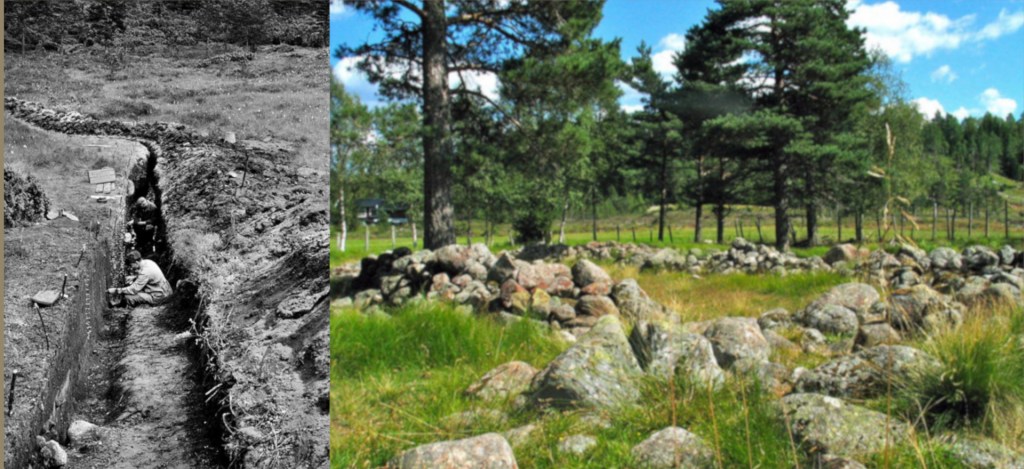
On the left, the 1954 excavation of the bog near Sosteli farm. On the right, the ruins of Sostli farm

At Sosteli, an old farmstead from the Iron age who was excavated by archaeologists in 1954, the cannabis seeds were also found in a bog — which bears resemblances with the finding site in Newfoundland. And this kind of location has its explanation with the process of making textiles and ropes, where the harvested cannabis plants were laid in water.

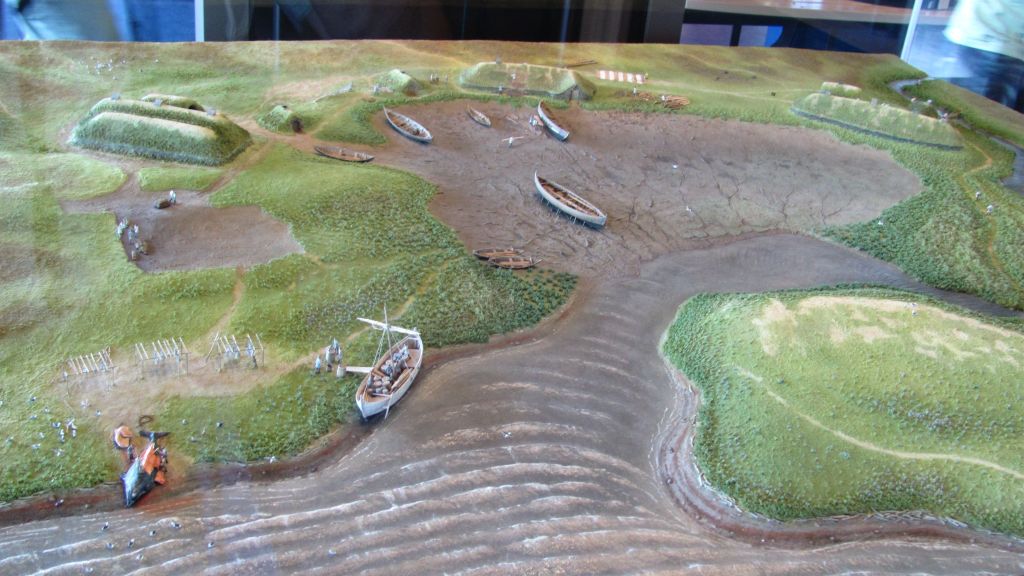
A model of the Viking settlement in Newfoundland

The Viking ships needed ropes, and the Viking settlement in Newfoundland is believed to have been used as a shipyard, which gives sense to the need for cannabis. But, however, this does not exclude the possibility of other usages as well, such as medicine or uses that are forbidden in many countries today.